Janša Orders: Krško Must Operate Despite Hot Sava River
Slovenian government declares lower energy supply risk level and orders nuclear plant to operate at minimum capacity until August 12, while HEP and Croatian Ministry of Economy remain silent.
Slovenian government declares lower energy supply risk level and orders nuclear plant to operate at minimum capacity until August 12, while HEP and Croatian Ministry of Economy remain silent.
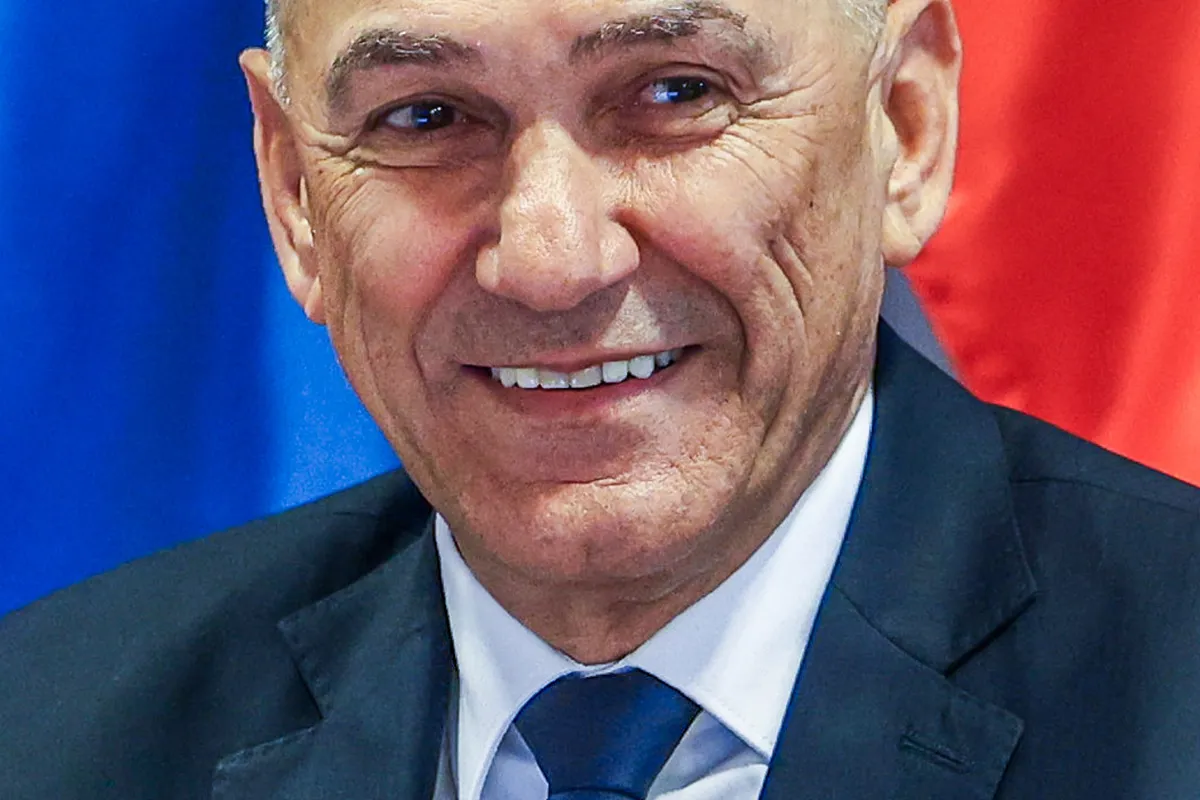
The Slovenian government, led by Prime Minister Janez Janša, decided at a telephone session on Thursday to order the Krško nuclear power plant to continue operating, at least at minimum capacity. The decision came after NEK's Management Board President Gorazd Pfeifer announced the plant might cease operations by the end of the week due to the increasingly warm Sava River and its low water level.
This situation directly affects Croatia as well. HEP owns 50 percent of the nuclear plant, which typically covers as much as 16 percent of Croatia's electricity needs. Due to the heatwave, the Croatian Transmission System Operator (HOPS) has already revised its estimate of peak hourly consumption to 3,248 megawatt-hours, eight percent higher than the previous day.
The Krško nuclear plant had already reduced its output to 80 percent capacity, or 520 megawatts, overnight from Wednesday to Thursday. Pfeifer then stated that "the plant, given the current trend of the Sava warming, would cease operations by the end of the week." However, analyses by the transmission system operator ELES showed that a complete shutdown would cause serious problems in the grid.
As reported by RTV Slovenia, "ELES's analyses showed that there is no guarantee of adequate voltage in the 400-kilovolt network in the event of a nuclear plant shutdown because voltages would be too high." It was precisely this risk of overvoltage that forced Janša's government to react urgently.
In the Slovenian government's decision, adopted at a telephone session on August 6, 2026, it is explicitly stated: "To ensure the smooth operation of the electricity system and uninterrupted power supply during the heatwave and low water levels, the Government of the Republic of Slovenia orders the Krško nuclear power plant to operate at least at minimum power that, given the temperature and flow of the Sava River, still allows for safe and reliable operation of the plant."
The same decision declared a lower level of energy supply risk for the period from August 6 to August 12, 2026. The order applies precisely to that period, but it remains unclear what will happen after that date, especially if the Sava continues to warm and water levels drop.
The Slovenian Ministry of Infrastructure and Energy and operator ELES have already announced that any shortfall in electricity resulting from reduced operation of Krško will be compensated through imports. On the other hand, neither HEP, which holds half ownership of the nuclear plant, nor the Croatian Ministry of Economy had issued any comment on the Slovenian government's decision at the time of this news release.
The Krško nuclear plant is crucial for the energy stability of both countries. While in Slovenia it covers between 20 and 30 percent of electricity needs, in Croatia that share is 16 percent. Any prolonged interruption or operation at minimum capacity, amid a heatwave and increased consumption, could pose a serious challenge to both electricity systems.